Category: tips

  • morning routine

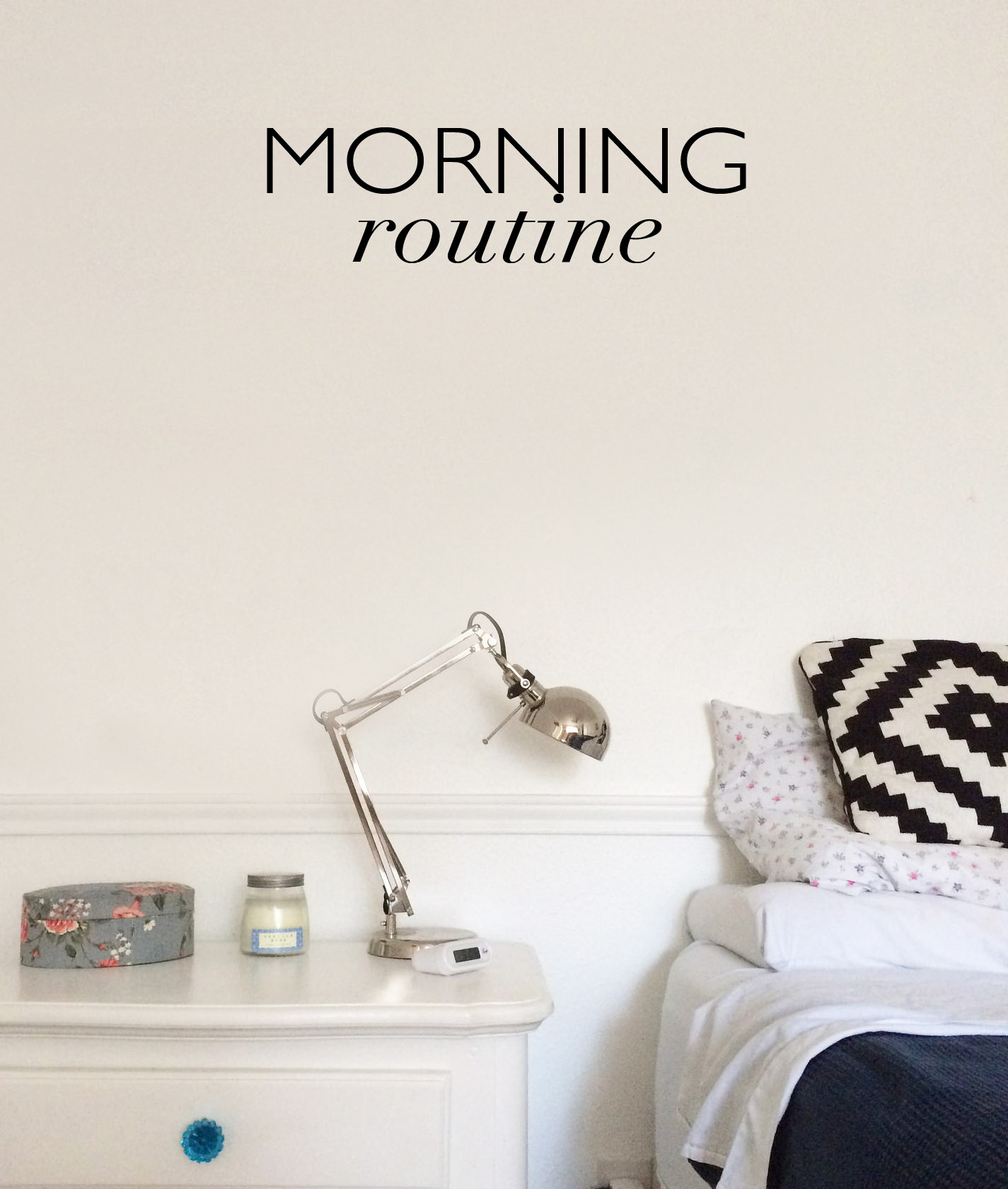
    morning routine

    I don’t know what it was, exactly, that made me feel so tired and out of control over the past few months, but I was. During that time I let a lot of my healthy practices slip away. I wasn’t sleeping well, and I’d wake up late and spend my spare minutes browsing my phone, then I’d rush the kids out the door and work all day, have an energy crash in the afternoon, eat whatever I wanted to give myself a boost, and convince myself that we were too busy for me to spend time exercising.

    The first step in me feeling more like myself was to let go of the extras, to recall my priorities, and that helped a lot. It changed my attitude, which gave me the motivation to work on healthy habits again.

    The second step was to establish a solid morning routine. I crave structure and boundaries, and I don’t have much (if any) time to myself during the weekdays so I knew I had to reclaim this time. I’ve been practicing this new morning routine for a couple of weeks now and it’s truly been revolutionary. But first, here’s what it looks like:

    8:00 p.m.

    The morning starts at night. I let myself check my phone once more for notifications before getting ready for bed, and then I plug it in to charge in the living room.

    Also notable: I go to sleep when the kids do, around 8:30 or 9:00 p.m. I’d love to stay up an extra hour with David when they get a little older, but for now this is working to get us all the most sleep.

    4:30 a.m.

    My alarm goes off. I now use a simple little clock on my bedside table; I like how small it is because when the first alarm goes off I hold it in my hand. It has short snoozes, about 4 minutes, and I allow myself three.

    4:45 a.m.

    Out of bed. It’s really not that hard to get up because usually Liam has been nursing on and off for awhile (I had to start closing the cats out of our room at night because they were just too active for me). I go straight to make coffee and while it brews I feed the cats, put away dishes that have dried overnight, and get stuff ready to make breakfast.

    5:00 a.m.

    I am sitting in the oversized chair in the craft room with my coffee, doing my Bible study (right now I’m reading through this). Sometimes Liam wakes up during this time and I will bring him to nurse and that way I can usually at least finish my study. If I finish what I’m reading or working on before thirty minutes are up, I will journal and/or pray.

    5:30 a.m.

    I read for pleasure for thirty minutes. Notice I haven’t looked at my phone once yet. Game changer! If Liam is awake at this point, I will still try to read but we will move to the kids’ room where he can play.

    6:00 a.m.

    It’s time to start getting ready for the day. I usually go in this order: make and eat breakfast, pack lunches, get dressed, do makeup, get Liam dressed, then finally get Meredith dressed. I do let myself check my phone at this point, and most days I’ll listen to a podcast while I get ready.

    7:15 a.m.

    We head to the car and I drop the kids at daycare before going to work.

    Some notes:

    • I’m 100% a morning person and I know waking before 5 isn’t going to happen for most people, but for me it’s totally worth it to start my day off right. I highly suggest figuring out some sort of morning routine that works for you.
    • Having the structure of timing all planned out has really helped me. You might not be so rigid, but it keeps me on track.
    • I feel such relief that every day I have dedicated Bible study and reading time. This is helping so much!
    • Lately the kids have been sleeping till at least 6, and Meredith until around 6:30. They used to wake up around 5 or 5:30, so obviously that makes a difference.
    • I do try to follow this routine on the weekends as well, but I tend to push everything back by an hour.

    So tell me, do you have a morning routine? What does it look like? Any ideas or insights to share?

  • tips for raising your spirited child

    I don’t read a lot of parenting books. I know there isn’t one certain parenting style that “works” and so every book written on the subject will have things in it that I can take or leave. But with Meredith at age 3, I needed help. (I still need help.) So last year I read Raising Your Spirited Child by Mary Sheedy Kurcinka and it was incredibly insightful.

    raising your spirited child

    Here is a summary of the book and the notes I took. This post is pretty long and I considered breaking it up into parts but ultimately I thought it would be more helpful to have it all in one place. If you have a spirited child, you will definitely want to read this!

    What is spirited?

    The subtitle of the book is: A guide for parents whose child is more intense, sensitive, perceptive, persistent, and energetic. That pretty much sums it up.

    Spirited children don’t all look the same, though. I would say that Meredith is FOR SURE extremely intense, sensitive, and persistent. She is not so much perceptive or energetic, though. (I do get the feeling that Liam will be energetic and persistent at the very least; not getting off easy with him!)

    Before getting into the specific characteristics, I want to touch on a few intro concepts that stood out to me:

    >Lose the negative labels. The way we talk about something matters. “Persistent” is a much better word that “stubborn.”

    >Know your child’s temperament, and know your own. Of all of the above characteristics, I only display moderate persistence and energy. A lot of my struggle parenting Meredith comes because I just don’t understand why she is doing what she is doing because I can’t relate.

    >Figure out how you and your child draw energy. Extrovert or introvert? This can explain a lot. I’m an extreme introvert. David is a mix. Meredith displays aspects of both, and I’m still trying to figure it out.

    raising your spirited child

    Tips for handling the spirited child

    Now I want to point out the specific tips I learned for each characteristic of spiritedness. I have returned to these over and over as Meredith grows and changes.

    Intensity
    >Pick up on cues for growing intensity.
    >Use calming activities (more on this later).
    >Use humor.
    >Sleep is sacred – guard it.
    >Don’t use time-out for punishment, but encourage it as a way to calm down.

    Persistence
    >Look for ways to say yes.
    >Negotiate/work together (this is not an abdication of parental authority because you are choosing when and how to involve them).
    >Find the reason behind the persistence – what are they trying to accomplish?
    >Have clear and defined rules that you never waver from (if they are older let them help decide).
    >Stop is a better word than no.
    >Use consequences, but as a last resort.

    Sensitivity
    >Give your child words to describe how she feels.
    >Be sensitive to stimulation.
    >Limit screen time (it overwhelms them).
    >Know when to quit – at times they just literally can’t handle any more.

    Perceptive (aka Distractible)
    >They have to feel calm and safe to be able to tune in; check how you communicate to them – not just verbally but with gestures and things around the house.
    >Try varied methods; sing songs, write a note, draw a picture, use touch, make eye contact.
    >Keep it simple: one thing at a time.
    >Say what you mean and be firm about it; don’t add “please” or “okay?” to the end of your directions when there really isn’t a choice.
    >Tell them what they CAN do; for example: instead of “stop running” say “walk slowly” and then give a funny demonstration.

    Slow Adaptibility
    >Establish routine – maybe even make a chart or draw pictures of the plan.
    >Allow extra time; you might have to wake yourself up earlier, but rushing is the enemy.
    >Give plenty of forewarning.
    >Closure: set a timer, ask where they’d like to save their project, allow a “transitional” object to come along, remind of the good things to come
    >use imagination to distract from the transition (like pretending you’re on the moon).
    >Limit transitions if possible.
    >Prepare them for possible disappointment – talk about “what if.”

    raising your spirited child

    Bonus traits of spiritedness

    Some kids get the following bonus traits as well!

    Regularity
    >A consistent routine & schedule is essential (they will take longer to adapt but they can).
    >They need self-help skills.

    High Energy
    >Plan for it: provide opportunities to move, but monitor so they don’t rev up. Maybe avoid activities that require lots of sitting but if they have to do so, allow time and space to move afterward.
    >Wild activity can just be related to overstimulation, too many transitions, or fatigue.

    Negative First Reaction
    >Encourage but don’t push.
    >Forewarn about new things and talk about what to expect.
    >Arrive early or visit ahead of time and allow child to observe.
    >Remind child of previous situations she first rejected but now enjoys.
    >Give a second chance.

    Mood
    >Help to see the positive; help them to see what they can do.
    >Teach good manners.
    >Ask specific questions about a situation rather than using general statements.

    raising your spirited child

    Tantrums

    Most tantrums are what can be called “spill-over tantrums” which is when the child has had their temperament pushed to the limits. They aren’t being bad, they just can’t handle their emotions.

    There are also peak times when tantrums are more likely to occur, and you should try to reduce demands during these times:

    >when your stress is high
    >late afternoons
    >developmental surges
    >getting up and getting out
    >empty energy banks

    What to do about tantrums?
    >run through a mental checklist of the child’s temperament to identify the trigger and if you can, stop whatever triggered it. Maybe it’s too much stimulation, or maybe they are hungry or tired.
    >stay with or near them. It’s scary for them to be left alone with strong emotions. They don’t know why they’re doing it. You can take a break if you need it but tell them, and then come back.
    >Touch them…
    >…or give them space if they’re introverted.
    >encourage them to move. Hold their hand and walk. Pace the hall.
    >Try distraction.
    >After 10-15 minutes, gently but firmly tell them to stop. Show them how to take deep relaxing breaths.
    >Talk to them about what’s flooding them with emotion. You might have to wait until later, but it’s worth a try.
    >Soft but firm voice. Eye contact.
    >Make sure your rules about appropriate behavior during a tantrum are clear. (Ex: it’s ok to cry, throw yourself on the bed, stomp your feet, yell, or ask to be held. It’s NOT ok to hit, kick, pinch, scream, throw things, blame others, spit, scratch, grab, or swear.)
    >Clarify consequences.
    >When in public, talk out loud. Bystanders will see that you’re handling it.
    >Usually spanking will just make it worse. (Personal note: this is absolutely true when Meredith is in the red zone tantrum mode; however we have started spanking for direct defiance at other times and it seems to be effective.)

    Bedtime & night waking

    >Expect that they will need your presence to calm them.
    >Protect naps – they need them more.
    >Have a predictable routine with clear limits
    >Create a nest.
    >Let them sleep in whatever clothes they want.
    >No bath right before bed; it raises body temperature and therefore energy.
    >Allow plenty of time; use a timer.
    >Use a picture planner.
    >Catch the window for sleep before they get a second wind

    Meals

    >Provide the right foods, then let go. You did your job and you can’t force them to eat.
    >They actually don’t need as much food as you think.
    >Make snacks a predictable part of the schedule. Make sweets a snack every now and then, so they aren’t “forbidden fruit.”
    >Eat meals together, if not all the time then at least regularly.
    >They don’t have to eat, but teach good manners at the table.
    >Involve them in food preparation.
    >Don’t use food as a punishment or reward.
    >Serve a variety of things at a single meal.
    >Set limits and minimize distractions.
    >Routine again!
    >Give them a clear transition to mealtime.
    >Let them know about the menu ahead of time.
    >Ask if they want the food. If they say no politely, respect that. They may just need to observe, and then they will try it when they’re ready.

    raising your spirited child

    Getting dressed

    >Create a space where distractions are minimized.
    >Don’t provide too many choices. If you don’t want them to wear something, don’t have it available.
    >Consider doing a “dressy” drawer, “school” drawer, and “play” drawer, then tell them which drawer to pick out of.
    >Have clothes that are easy to take on and off, are soft and comfortable, without tags if possible. It might be worth it to spend more to find clothes you both love and they will wear. Shop with them.
    >Use imagination while getting dressed; pretend they are putting on a space suit or something.
    >Give clear verbal instructions that break it down into little parts.
    >Again: allow time, set up a routine, and choose clothes ahead of time.

    Thoughts on the book as a whole

    Overall this book was essential for me to understand Meredith. I’ve learned to recognize triggers and prevent a lot of tantrums. It’s kind of my guidebook. However, tantrums still happen and there are times when NOTHING works. And there is hardly any emphasis on discipline in the book, something that I feel needs to happen for willful defiance. But still, I recommend it highly for parents of spirited children when the regular parenting books just aren’t cutting it.

    p.s. what I learned from Bringing Up Bébé.
  • a quick tip for avoiding financial hangover

    avoiding financial hangover

    So as you can see this post is sponsored, but I was happy to be able to share this company with you if you don’t already use them or aren’t familiar. Specifically, I want to share with you my number one tip for handling irregular bills and holiday expenses: save up all year.

    That might seem like common sense. For me, it was what I always tried to do, but if I just tried to save the money in my checking account I’d very likely end up spending it. Or if I put money in savings I wouldn’t know what I should be using the money for, or I’d use it on something else if it came up.

    When one of my coworkers told me about CapitalOne360 a few years ago, I had that feeling like I had finally found the exact thing I never knew I needed. You can create as many different savings accounts as you want, and there is no minimal balance. And you can rename all the accounts so that you know exactly what you’re saving for. Right now we have accounts for: emergency fund, HOA fees, auto service, Christmas, vacation, miscellaneous, and fun money for both my husband and me. Sadly not all of those accounts have money in them, but you can see we have goals!

    So what we do is treat those things like monthly bills. So for Christmas, for example, we figure out our budget and divide it by twelve. Then on the date that we decide that bill is “due” I transfer the money to the savings account from our main checking account. It takes about three days to transfer either way, and everything is completely free. With the money being in these separate accounts, it’s just far enough out of reach that we usually don’t pull it out for anything other than what it’s designated for. Life changing, I tell you.

    You can see that I love their savings accounts, but they have other great programs too. Check out their Black Friday sale; now is a perfect time to get started! At the very least, I super recommend the 360Savings account.

    I was selected for this opportunity as a member of Clever Girls and the content and opinions expressed here are all my own.

  • keeping up with personal projects when you feel overwhelmed

    keeping up with personal projects

    Life has been busy lately! Between all the sicknesses in our household, a spirited toddler, more patients at work, and an overbooked schedule, I haven’t had much time for myself. That’s okay; it’s the season of life I’m in and I know it will come and go.

    You probably know by now that I am a very goal-driven and aspirational person. I always have personal projects that I’m working on, both big and small, and even more that I’m dreaming up.

    I actually become even more inspired when I am busy with other things. When I’m active physically my mind is active as well. Lately I have so many ideas and dreams and hobbies that it can be easy for me to get overwhelmed with them and lose focus. When I find myself mindlessly playing games on my phone instead of making any progress toward my goals, I know something needs to change.

    Here’s what I do:

    1. Write everything down.

    I’m a huge fan of the Getting Things Done method. I use the Things app to capture any task or idea, placing them in the Inbox. That way I can stop using mental space to hold onto them. Then when I have some time, I can go back and categorize the tasks or create new projects out of them. I do that in the app, or using Evernote if it’s something larger.

    2. Figure out what needs attention NOW.

    I’m talking about personal projects here. It’s always a given to me that I put my faith, my family, my job, and the household first (that includes housework and meals). Sometimes there isn’t time for anything else, but usually I’ll have small pockets of time here and there even during a busy season. So I like to have a plan for what I want to focus on.

    For me, right now, there are three ongoing activities that I want to keep up with: my training runs, blogging, and reading. Probably in that order. The runs are important because I feel better when I exercise and I don’t want to die when running the half marathon in January. Blogging is a constant creative outlet (good for my soul) and a community. Reading is just something I love, and I’m part of two book clubs that I want to keep up with.

    Once I figure out that those are the most important things for the moment, I make a plan. Ideally I’d love to run 4 times per week, but my goal is 3 (two short runs on weekdays and a long run on the weekend). On an especially busy week I could make do with 2 (a short and a long). I tell myself that during any downtime I can work on the blog or I can read. It’s okay if my posts aren’t amazing or if I only read a few pages a day. I’m still making progress, and I’m not wasting time.

    3. Prioritize the larger projects.

    Then there are the larger projects, dreams, and goals. These are what can really trip me up because I want to do all of them right now. But when I gave myself permission to delay working on some of them, a weight was lifted. I decided to focus on one thing at a time for now, and this is what it’s looking like:

    >Holiday prep (including purchasing gifts, my annual holiday minibook, and possibly completing the advent calendar)
    >Liam’s birthday (planning his party and any memory-keeping to go along with it)
    >A quilt for Meredith
    >Blog development
    >A possible creative business idea

    So that’s what’s working for me during this busy season! Now it’s your turn to share your tips. How do you keep up with your personal projects?

  • my new life management notebook

    I think I’ve finally found a life management notebook that is going to work for me. If you’ve been reading for any amount of time you know that I love digital management for the big stuff (mainly iCal for my planner and the Things app for my to-dos and project tasks) but I also find paper and pen very helpful for some things. That led to me trying out a bullet journal, which was pretty effective, but it wasn’t perfect for me.

    life management notebook

    Enter the Discbound system from Staples! I totally researched and purchased all of this on my own but I’m loving it and want to share. So the cool thing about this is that it is flexible like a 3-ring binder (meaning you can take stuff out and put it in) but it functions like a notebook, making it easier to write in, hold, and manipulate.

    life management notebook inside cover

    There are a bunch of different notebooks that use this system, but I have this one. I also have these dividers and this hole punch.

    Here is how I’m using each section of my notebook.

    Monthly

    life management notebook special dates

    life management notebook special dates

    life management notebook monthly

    First of all I created a section that I check in with every month. It has a list of special dates, so I know whose birthday is coming up and I can order gifts and send cards. I also put in some copies of my “how am I doing” self-check worksheets, which I like to fill out monthly to make sure I’m not neglecting one area of my life. And then I have some blank paper where I am planning on documenting my monthly goals.

    Meal Planning

    life management notebook meal schedule

    life management notebook dinner ideas

    The second section is for meal planning. I am using this printable calendar which is just so simple and functional. (Note that we eat the same thing almost every day for breakfast and lunch so I don’t really need to plan those meals. And I write my grocery list on a separate piece of scratch paper because I give it to David and he does the shopping.) Behind that I’m keeping a list of go-to dinner ideas.

    Bullet Journal

    life management notebook bullet journal

    Next is where my bullet journal lives! And I still use it in pretty much the same way as I wrote in this post, except that I decided to separate out the stuff regarding faith and creativity to be their own sections.

    Faith

    life management notebook sermon notes

    So far I mainly use this for sermon notes, but I also used it for notes for a church women’s book club I lead, and I’ll probably use it for my women’s Bible study notes as well. (I have a separate journal for my personal daily devotions.)

    Creative

    Lastly I have a section devoted to anything creative which is most of my hobbies. So right now I have a “to do someday” list, house project ideas, and homework from the Blog Life e-course I’m working through.

    I love this notebook so much you guys. The only drawback is that it’s not small. I debated on whether to get this size or the smaller one, and I went bigger because I wanted the room to write and I wanted to be able to easily put in 8.5×11 sheets of paper. But you could definitely do the same thing with a smaller size!

    So what do you think? Do you do anything similar?